
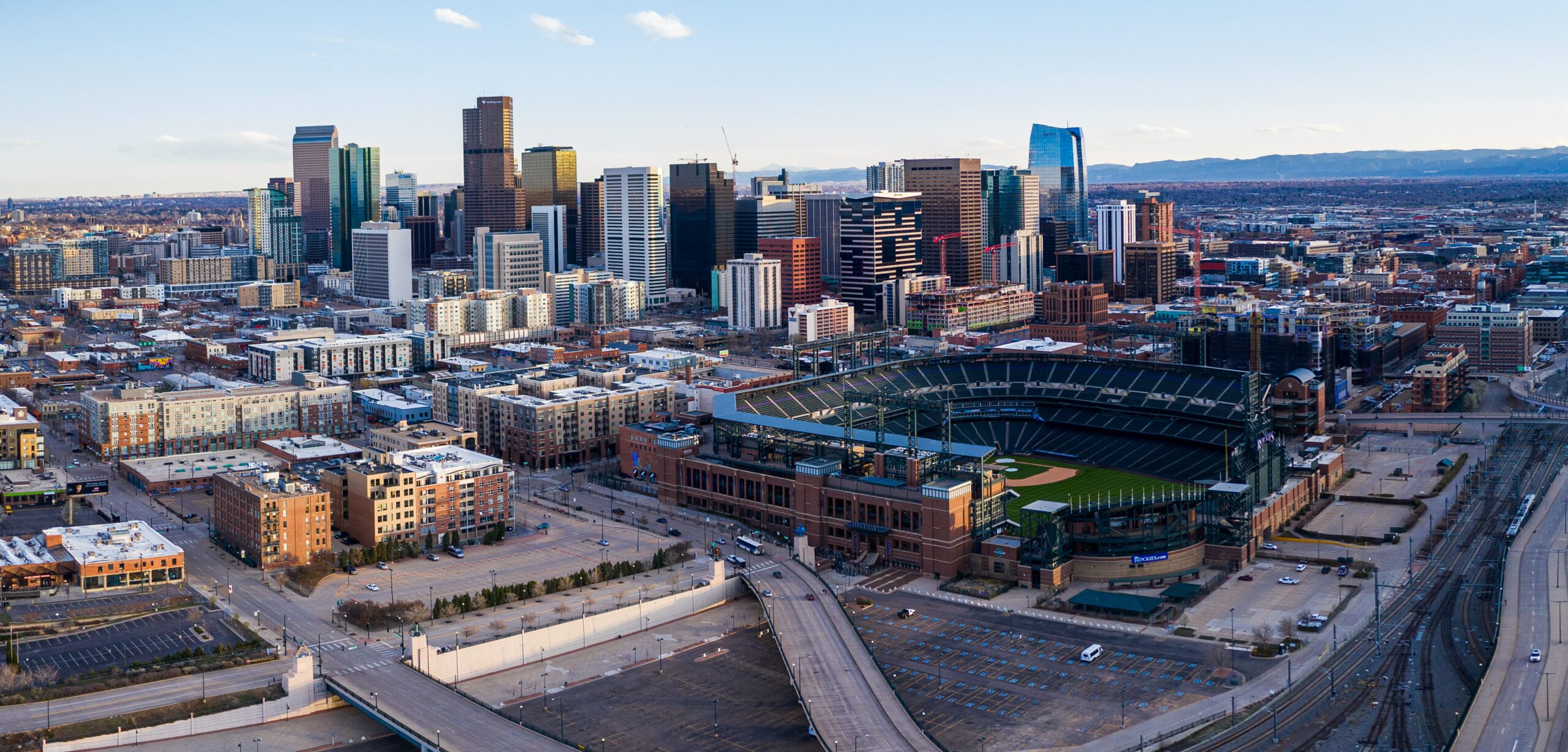
Office Sector
At 17.1% as of 24Q3, Denver has one of the highest vacancy rates among major U.S. markets. Low office utilization has plagued nearly every market across the nation, but Denver is more susceptible than most due to the market’s high exposure to tech sector workers who have led the way in adopting flexible workplace arrangements.
Office availability is likely to remain elevated in Denver for some time, as current leasing trends suggest that companies are adjusting their footprints to lower space-per-worker requirements when their leases expire. Leases signed in the second quarter averaged about 3,200 SF, representing a 42% decrease in average lease size since its peak in 2015.
There are fewer tenants in the market relative to pre-pandemic averages, but those who are in the market are placing more scrutiny on the value that potential office space would bring to their businesses. As companies move away from older office buildings and into higher-quality space, buildings constructed after 2020 are benefitting from leasing demand.
Comparatively, Denver has a high concentration of older buildings which have borne the brunt of softening demand. This subset includes some of Denver’s most iconic buildings in downtown that have struggled to maintain adequate cash flows as tenants vacate, leading to distressed or delinquent loans.
With the abundance of available space, the Denver office market remains tenant-favorable. While base asking rents have held relatively steady since the beginning of 2021, tenants have maintained leverage in lease negotiations by asking for steep concessions and higher tenant improvement allowances. Additionally, tenants can get a 30% discount on built-out sublease space relative to direct space.
Persistent weakness in the office market and an unclear outlook have suppressed investor demand. Investment volume in the past year was down by 60% from its five-year annual average, the most dramatic slowdown in sales among property asset classes. Price discovery is still underway, but a handful of recent repeat sales ranging from trophy assets to suburban mid-rises indicate a correction in values of at least 20%.
Leasing
A pronounced market imbalance persists as tenant space requirements remain depressed by historic standards. Denver’s vacancy rate has reached a record 17.1%, and is anticipated to move higher in the year ahead. Leasing volume has remained relatively flat since the beginning of 2021, averaging roughly 10 million SF per year. However, this represents a drop of about 25% compared to the market’s pre-pandemic five-year annual average.
Market participants note that leasing activity is shifting away from short-term renewals, with tenants in the market turning to new leases as their return to office strategies are solidified. Leasing activity has been driven by law, energy, and aerospace companies upgrading space to aid in recruitment and retention. However, occupiers are often downsizing their space requirements, as indicated by many sizeable new leases. Xcel Energy signed a deal for 220,000 SF at the new T3 RiNo development. This is Denver’s largest lease dating back to 2017, but still represents a 27% reduction in footprint from the tenant’s current location in LoDo. Similarly, law firm Davis Graham & Stubbs will anchor the new Paradigm River North building. The new lease totals 77,000 SF, down from the 110,000 SF currently occupied at the 2000-built Millennium Financial Center in the CBD.
Leasing activity has been insufficient to offset tenants downsizing, exiting leases, or putting space on the sublease market. Tenants gave back 2.4 million SF in 2023, resulting in the fourth consecutive year of negative net absorption. Even submarkets that historically were in high demand, like Platte River and LoDo, are experiencing significant challenges. However, vacancies accelerated at the fastest pace at the beginning of the pandemic, increasing by 280 basis points in 2020 alone when occupancy losses were compounded by consolidation in the oil and gas industry. Since the beginning of 2021, the pace of vacancy expansion has slowed to an average of 120 basis points per year, a pace that is in-line with the national benchmark.
Performance varies by building attribute, and vintage has played a key role in determining demand in the past year. Buildings completed since 2020 have recorded positive net absorption amounting to 575,000 SF. Comparatively, Denver has a high concentration of older buildings that have borne the brunt of softening demand. Buildings completed prior to 2020 have recorded over 2.7 million square feet of negative net absorption in the past year. Offices constructed during the 1980s building boom, a subset that includes some of Denver’s most iconic buildings like Republic Plaza and Wells Fargo Center, have been most impacted, accounting for half of the annual negative net absorption.
New construction deliveries will play a larger role in vacancy expansion in 2024 with nearly 2.1 million SF scheduled for completion by year-end, about half of which is available for lease. For comparison, about 2.6 million SF has been added in the past three years combined. Additionally, broader challenges in the local economy do not support a rebound in the office market in the foreseeable future. According to Metro Denver, the Denver metropolitan area has the fifth-highest concentration of technology workers in the U.S.
Weakness in tech, in combination with a lack of job growth within office-using sectors and a deceleration in corporate expansions will contribute to further declines in demand in the year ahead.
Industrial Sector
The construction boom that caused vacancies to spike over the past two years is fading, indicating that Denver’s industrial market may be in the beginning stages of a return to balanced fundamentals. Even so, 2024 could prove to be a challenging year. While the vacancy rate is not expected to rise much higher, at 7.5%, it is among the highest of any major U.S. market and will likely remain elevated through the end of the year as the final wave of projects from the building boom is scheduled to deliver.
Tenant demand accelerated in the final months of 2023 and into the first half of 2024, coinciding with key positive economic data, including an uptick in consumer confidence and wage growth rising above inflation. Most recent leases are in the East I-70 corridor, an area of Denver that offers convenient access to major highways, rail, and Denver International Airport, as well as proximity to a skilled labor force.
A large tally of projects, a total of 4.4 million SF, is still under construction. Most of this space is scheduled to complete construction this year, and new supply is projected to outpace demand through 24Q4. The big box segment will be most impacted by future deliveries, as roughly 80% of the current pipeline consists of properties 100,000 SF or larger.
However, most developments underway broke ground in late 2022 and early 2023 when interest rates were at all time lows. Following national trends, developers have pulled back on construction starts amid higher rates and tighter lending requirements for construction loans. Over the past four quarters, local industrial construction starts have totaled only 2.8 million SF, down 76% from peak levels in 2022 and 47% below the pre-pandemic five year average. This is setting the stage for fewer completions beginning in 2025, which should help Denver’s vacancy rate to stabilize.
Denver’s industrial market will need to contend with the remaining supply pipeline before rent growth can recover to pre-pandemic norms. With vacancies expected to remain elevated in the near-term, rent growth is projected to decelerate to 2.1% in 2024, marking the weakest recorded rent growth since 2011. However, the recent pullback in construction starts should limit additional supply pressure from hitting the market in 2025. With space availability likely to begin to tighten again next year, there’s potential for rent growth to accelerate during 2025-26.
Small bay properties are set to outperform, as the market remains dominated by small and midsize distribution tenants that serve the local population. With developers focused on bulk distribution centers in recent years, less new construction has been built to serve smaller tenants, and small bay properties remain in high demand with space listings that typically only last less than four months.
Rent
Industrial rents in Denver are up by 2.2% annually, lagging behind the prepandemic five-year annual average of 6.8%. The vacancy rate will likely remain high through the remainder of 2024 due to an active construction pipeline and slower leasing, causing rent growth to decelerate further in the near term, potentially to the lowest levels recorded in more than 10 years.
Average industrial rents across the Denver market are $12.30/SF, as of the third quarter of 2024. However, that figure includes rents for flex spaces and small bay properties, which typically rent for significantly higher rates on a per-SF basis. Flex rents currently average $16.60/SF, while the average advertised rent for spaces within properties smaller than 25,000 SF is currently $13.30/SF.
Property owners typically offer lower rents for larger distribution spaces. Near Denver International Airport, an area that serves as Denver’s primary logistics hub, rents are on the lower end of the spectrum due to an abundance of developable land that has allowed for outsized inventory expansion. A number of larger leases for early 2000s vintage spaces have been signed for rents between $6 and $7/SF recently. Aspen Distribution signed an 85,250-SF sublease in Majestic Commercenter in November for $6.34/SF NNN. A year
prior, Andersen Logistics signed a 59,920-SF lease for $6.50/SF NNN in the same park. Both buildings were constructed in the 2000s and feature 30-foot clear heights with immediate access to I-70 via Tower Road. New construction in the area can fetch over $9/SF. Lone Star Logistics leased 23,400 SF in a 2023-built distribution building with 30-foot clear heights just off Peña Boulevard for $10.75/SF NNN, and nearby The Lawless Group leased 26,460 SF for $9.50/SF NNN in a 2021-built distribution building.
Rents are highest closer in to central Denver and in suburban areas where developers face hurdles, limiting new construction. Broomfield, in northwest Denver, has some of the most stringent zoning laws aimed at protecting open spaces, and the limited amount of modern industrial space that is available comes at a premium. Park 36 is adding two warehouses totaling 67,500 SF each with 28-foot clear heights. The development is targeting an April 2024 construction completion and currently lists rents of $15.50/SF NNN. Also in Broomfield, grocery wholesaler The Feed recently leased 75,290 SF at a 2023-built distribution center with 28-foot clear heights for $13.25/SF NNN in starting rent.
There is potential for rent growth to pick back up in 2025- 26, when space availability will likely tighten given the limited number of speculative developments on track to complete mid-decade. However, Denver will be entering this recovery with a significantly higher vacancy rate than most major markets, which could still cause rent growth to trail the national average.
Retail Sector
As of 24Q3, Denver’s retail market continues to benefit from an exceptionally low availability rate, limited new construction, and a resilient consumer base. This comes despite longstanding concerns of a softening economy and Denver’s slower population growth.
Retail availability has hit a record low of 4.7%, coming in below the 10-year average of 5.5%. Low availability is beginning to impact leasing activity as tenants face challenges securing the right type of space. On the smaller end of the market, national chains, including quick-service restaurants, convenience stores, and banks, are driving leasing activity. In larger formats, experiential tenants were key drivers of demand, as reflected in the top leases signed in the first half of the year.
Denver’s construction pipeline remains subdued, and the projects that move forward overwhelmingly consist of freestanding build-to-suits. Retail inventory has grown at the slowest pace of all major asset types in Denver, helping to restore balance in the market.
While availability and new construction remain minimal, retail rents have barely risen over the past year, up by 2.1%, slightly above the national benchmark of 2.2%. When adjusting for inflation, rent growth in real terms is in negative territory. This trend contradicts the tight fundamentals that should support robust rent growth. Anemic rent growth has been broad-based, geographically and by type.
In line with national trends, transaction activity is down in the Denver market even as fundamentals remain strong. In the current high-interest rate environment, the buyer pool has shifted predominately to small private investors who target single-tenant net-leased deals valued under $5 million. Cap rates in this tier tend to be on the lower end of the spectrum but have generally moved upward since the beginning of 2022 by about half a percentage point and now average in the low-5% range. The number of deals closing above $5 million is limited, with the largest deals in the past year focused on value-added plays with higher cap rates owing to the heightened risk in this tier and the more management-intensive nature of these assets.
Denver’s retail market is projected to remain tight through 2024 due to limited new construction and positive demand. Retail sales growth has outperformed in recent years, indicating that retailers are doing more with less by focusing on efficiency in this continuously evolving sector.
Construction
Roughly 300,000 SF of retail space is currently under construction across the Denver metro, representing just 0.2% of total inventory. While fundamentals have tightened considerably in recent years, the rise of ecommerce and its impact on brick-and-mortar locations dominated headlines for decades, and the perceived and real risks associated with retail led to increased scrutiny of new developments.
Developers shifted focus to other product types. In the last 10 years, Denver’s retail inventory has increased by just 4.6% while the industrial sector, driven by booming online sales, has increased by 22%. Denver metro’s population has grown by over 12% during this time, resulting in a steady decline in retail SF per capita in the last decade. Retail sales growth has outperformed in recent years, indicating that retailers are doing more with less by focusing on efficiency in this continuously evolving sector.
The projects that receive the green light to move ahead with development largely consist of smaller freestanding build-to-suits or ground-floor retail spaces in mixed-use communities. Competition for available pad sites remains fierce, giving deep-pocketed national retailers an edge. Some of the retailers currently expanding in Denver include Raising Cane’s and Dutch Bros Coffee.
In addition to limited new projects, developers have been actively demolishing existing retail space. Over 2.0 million SF has been demolished in the last five years, tempering the impact that new supply has had on market fundamentals. Redevelopment plans have been proposed for a number of properties. For example, an apartment developer purchased property in the Capitol Hill neighborhood at the corner of 8th and Lincoln Street. The site is currently home to a 14,000-SF retail building that houses LowDown Brewery & Kitchen and VSS Gym. The new plans for the site call for the existing retail structure to be torn down to make way for an apartment community that will have roughly 5,000 SF of ground floor retail space. The Belcaro Shopping Center on Colorado Blvd., currently home to King Soopers and a mix of smaller retailers, also has plans to be demolished for multifamily redevelopment. However, demolition has slowed since the spring of 2023 as multifamily developers find it increasingly difficult to obtain financing in the high interest rate environment.
Just 8% of space currently under construction is available for lease. With high levels of preleasing, the current supply pipeline is unlikely to apply pressure to vacancy in the year ahead.
Denver Economy
Denver’s economic outlook for the fourth quarter of 2024 remains robust, bolstered by its diverse industry base, including technology, aerospace, and healthcare. The city has seen consistent population growth, driven by job opportunities and a high quality of life, which continues to fuel consumer demand. While inflationary pressures have cooled compared to previous quarters, interest rates remain elevated, which may temper some consumer spending and business expansion. However, Denver’s strategic location as a transportation and logistics hub, combined with its thriving energy and green tech sectors, positions it for sustained growth, albeit at a more moderate pace than in earlier years.
In commercial real estate, the office sector continues to face challenges as hybrid work models persist. Vacancy rates in downtown Denver, particularly for Class A office spaces, remain above pre-pandemic levels. However, there is increasing demand for flexible office spaces and suburban office developments as companies adapt to evolving workforce preferences. Industrial real estate, on the other hand, is seeing significant growth, driven by strong demand for distribution centers and warehouses linked to e-commerce expansion. This sector is likely to continue thriving in Q4 2024, particularly with Denver’s role as a logistics hub.
The retail and multifamily sectors also show mixed trends. While traditional brick-and-mortar retail faces headwinds, mixed-use developments and experiential retail spaces are performing well. Additionally, the multifamily sector remains resilient due to Denver’s population growth and a shortage of affordable housing. Investors continue to show interest in the residential market, although rising construction costs and high interest rates may constrain new developments. Overall, commercial real estate in Denver is adapting to post-pandemic shifts, with certain sectors, particularly industrial and residential, showing stronger performance than others heading into the final quarter of 2024.